Custom ERP for Distribution Businesses: Lessons from Building Sorvet EDGE
Growing distribution companies often outgrow spreadsheets and disconnected tools. Orders live in one place, inventory in another, and accounting in Tally — leaving teams with delayed decisions and manual reconciliation.
That is why many businesses look for custom software development focused on business automation, not just another generic dashboard.
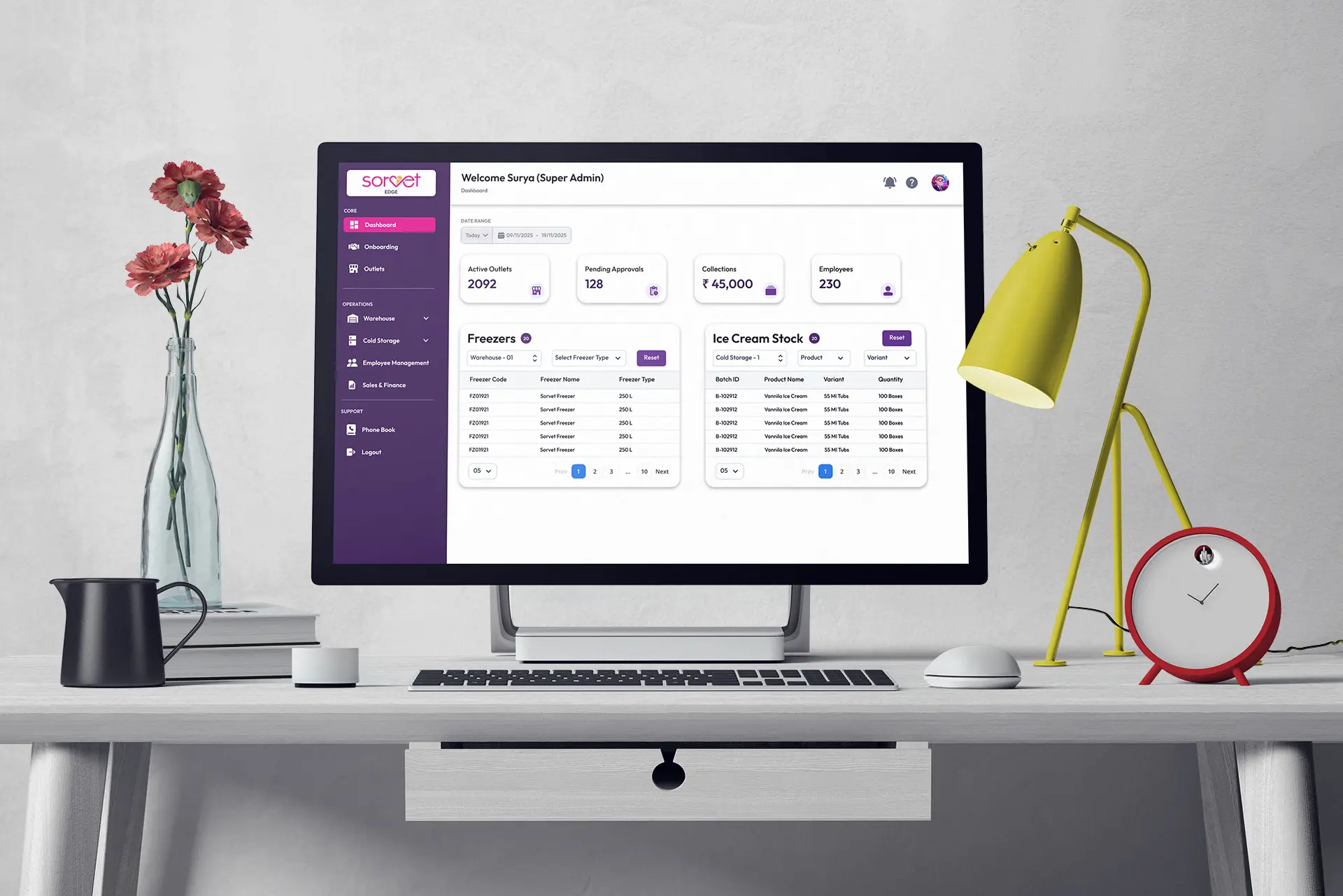
At SenseSemi, we built Sorvet EDGE for Pramukh Industries — a distribution ERP covering outlet onboarding, order management, warehouse and cold storage operations, delivery tracking, inventory control, team management, and Tally integration.
Why Distribution Businesses Need Custom ERP
Off-the-shelf software rarely matches real distribution workflows. Common gaps include:
- Multi-outlet onboarding and role-based team access
- Cold storage and warehouse inventory controls
- Delivery tracking tied to sales operations
- Accounting sync with Tally
- Reporting that matches how managers actually work
A custom ERP closes these gaps by fitting the process instead of forcing the process to fit the tool.
Core Modules That Matter
Based on our distribution delivery experience, high-impact modules usually include:
1. Outlet and Team Management
Onboard outlets, assign responsibilities, and keep sales operations organized.
2. Order and Sales Workflows
Capture orders cleanly and move them through fulfillment without repeated data entry.
3. Warehouse and Inventory Control
Track stock movement, cold storage constraints, and availability in near real time.
4. Delivery Tracking
Give operations teams visibility from dispatch to delivery completion.
5. Tally Integration
Reduce duplicate accounting work by connecting operational data with financial records.
Business Impact You Can Expect
Without inventing vanity metrics, the practical outcomes of a well-built distribution ERP are clear:
- Centralized management across outlets and teams
- Automated manual processes between sales, warehouse, and accounts
- Improved workflow visibility for supervisors
- Easier reporting for operational decisions
- Better scalability as the outlet network grows
Explore the full project write-up in our Sorvet EDGE case study and the complete admin functionality guide: Sorvet EDGE Admin Panel.
When Should You Build vs Buy?
Choose custom ERP development when:
- Your workflows are unique to distribution or manufacturing
- Integrations (like Tally) are critical
- You need phased delivery and long-term ownership
- Ready-made tools create more workarounds than value
If you are evaluating options, start with our software development services or browse more case studies.
Conclusion
A distribution ERP is not just software — it is an operations system. Projects like Sorvet EDGE show how custom software development and careful integration can turn fragmented processes into a connected, scalable workflow.
Need a similar solution for your business? Contact SenseSemi and let’s build it together.